Strange Place Names
UK & Ireland

Place Name
County
Apple Pie Plantation
Country
England
Decimal Degrees
w3w
Image View
Google Map Link

Key Words
Apple Pie Plantation, Nottinghamshire, England
Not an orchard, not a bakery - but definitely food for thought!
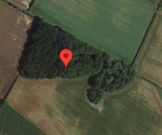
Wooded area in Gamston visible from Brick Yard Road
Introduction:
When you hear the name Apple Pie Plantation, your first instinct is to assume someone’s playing a prank. Surely this is a quaint name for a pastry shop, or perhaps a themed children’s playpark with a suspicious surplus of gingham. But no - this is a real place in the green and pleasant county of Nottinghamshire, England.
Apple Pie Plantation sounds like the dream of a particularly hungry cartographer, but this delightfully odd place name belongs to a genuine patch of British countryside. While there’s little chance of stumbling across bubbling tarts or actual plantations in the colonial sense, the name sticks in your brain like caramelised fruit in a crusty tin.
So, what’s the story? Who planted the pie, and what on earth is it doing in Nottinghamshire? Let’s tuck in.

Toponymy:
“Apple Pie Plantation” is one of those glorious names that straddles the line between delicious and deranged. But let’s break it down.
Apple Pie - Universally loved, this part of the name conjures feelings of warmth, home, and baked goods cooling on windowsills in the imagination of every child raised on cartoons. In British toponymy, it’s extremely rare. While “Apple” and “Pie” each crop up here and there in place names (Appleton, Pie Corner), the combo is virtually unique.
Plantation - Here’s where it gets interesting. In the UK, “plantation” in a place name typically refers to an area of planted woodland, especially those laid out in the 18th or 19th centuries. It has nothing to do with the colonial plantations of the Americas or the Caribbean and is far more likely to involve oaks than economics.
So, what do we have? Most likely, Apple Pie Plantation is a planted woodland (or was originally one), and the “apple pie” part could have been a whimsical nod by a local landowner, surveyor, or gamekeeper. Perhaps the area smelled sweet after rain, or maybe it was an in-joke lost to time. Or perhaps someone just really liked dessert.
There’s no formal record of a bakery or orchard - just a sense that someone, somewhere, wanted to leave behind a name that would make future generations do a double take.
Historical Context:
Apple Pie Plantation sits in Nottinghamshire, a county steeped in legend, rebellion, and agriculture. While the plantation itself doesn’t appear to be a site of major historical events, the surrounding area has a rich backdrop.
Nottinghamshire, of course, is home to Sherwood Forest, the legendary stomping ground of Robin Hood. Apple Pie Plantation lies not far from this mythical domain, and the area’s long history of forest use - whether for hunting, timber, or folklore - lends itself well to whimsical woodland names.
In the 18th and 19th centuries, many landowners began to create plantations for timber, often with decorative or sporting purposes in mind. These new woodlands were sometimes given novelty names - particularly if they were on estates where estate managers or aristocrats were trying to amuse themselves or impress guests.
Apple Pie Plantation could have been one such creation - a small stand of trees, perhaps planted for pheasant shooting, or as a picturesque copse near a larger estate.
20th Century Cartographic Curiosities
Sometimes, the Ordnance Survey maps of the 20th century solidified names that were originally nicknames or jokes. A forester might call a patch of woodland “Apple Pie”, and the name would be picked up on local maps, only to become official through repetition and record-keeping.
Points of Interest:
While Apple Pie Plantation may not come with interpretive signs or gift shops (yet), its location offers some lovely nearby diversions.
Clumber Park - A beautiful National Trust property nearby, Clumber Park boasts a serpentine lake, gardens, and over 3,800 acres of parkland and woods - it’s the kind of place you could easily imagine apple pies being baked for a Victorian picnic.
Worksop - Just a stone’s throw away, the market town of Worksop is steeped in history and serves as a gateway to The Dukeries, a collection of stately homes and estates including Welbeck Abbey, Thoresby Hall, and Clumber itself.
Creswell Crags - A stunning limestone gorge with prehistoric caves, Creswell Crags offers insight into Ice Age life - and proves that even before apple pies, this land was full of stories.
Sherwood Forest Visitor Centre - A visit to Nottinghamshire wouldn’t be complete without paying homage to the Merry Men. The Major Oak, supposedly Robin Hood’s favourite hideout, is a short drive away and provides ample medieval flavour to your woodland-themed adventures.
Notable Figures:
There’s no record of anyone called Mrs. Apple Pie living in the area, sadly. Nor any baking magnate or pastry-themed poet. But Nottinghamshire hasn’t been short on characters.
D. H. Lawrence - The fiery novelist and poet was born in nearby Eastwood. Lawrence often wrote of earthy passions and rural life - though apple pies, metaphorical or otherwise, don’t feature heavily in his more brooding works.
Thomas Secker - Born in Sibthorpe, not far from the plantation, Secker became the Archbishop of Canterbury in the 18th century. He likely never visited Apple Pie Plantation, but he would certainly have approved of its heavenly name.
Robin Hood - The legendary outlaw and folk hero known for "robbing from the rich and giving to the poor," whose tales are set in Sherwood Forest.
Lord Byron - A famous poet and leading figure in the Romantic movement, born in London but raised at his family's estate in Nottinghamshire.
Jessica Ennis-Hill - An Olympic gold medallist in heptathlon, she was born in Sheffield but has strong ties to Nottinghamshire through her training and career.
Conclusion:
Apple Pie Plantation is one of those places that makes Britain’s landscape such a joy to explore. It’s rural, real, and wrapped in a name that makes you smile. It’s hard to say for certain who coined it or why, but that’s part of the charm.
Whether it’s the remnant of a landowner’s joke, a forest worker’s nickname, or simply the kind of map mischief that adds flavour to the world, Apple Pie Plantation stands out as a symbol of all that’s odd and wonderful about British place names.
And if you’re still hungry for more, you can always visit Strange Place Names - your one-stop shop for the curious, the comical, and the cartographically unhinged.
FACEBOOK - strangeplacenames
INSTAGRAM - strangeplacenames_2024
53.2897, -0.9653
DMS
53°17'23"N 0°57'55"W
Geographical Feature & Flora & Food and Drink
Nottinghamshire